The lubricant industry especially in Africa faces several challenges. Key among them that cuts across the four corners of the continent is counterfeit lubricants. From North to South, East to West Africa, the challenge of counterfeit lubricants remains a major issue that undermines market integrity, reduces profits for genuine brands, and also tarnishes the name of authentic genuine brands, especially when counterfeiting involves using packaging of a known brand yet the contents of the container are a low-quality brand.
Having said that, the next thing to look at is a quality lubricant and differentiating it from a counterfeit one. It is equally important to address the role that lubricant producers, the government and the public can play to fight against counterfeits in the market.
By a simple definition, a quality lubricant is made by blending base oils and additives. Base oil is a by-product of crude oil refining processes, and the quality depends on the refining process. There is also a superior grade of base oil that is chemically formulated to offer superior performance in extreme conditions.
Any lubricant that is made from the base oil produced from crude oil refining processes is generally referred to as a conventional or mineral lubricant while that made with chemically-made base oil is denoted as a synthetic lubricant. This is the reason why synthetic lubricants are sometimes defined as lubricants that are chemically made.
Examining the second component of the lubricant, which is an additive, reveals its vital role in determining the performance of a lubricant. Additives are complex chemical compounds added to base oil to improve quality and certain performance characteristics, including reinforcing some special properties present in the base oil.
Quality lubricants, made from high-quality base oils and additives, provide the required film strength between the moving parts of the equipment. Without this film strength, there will be metal-to-metal or component-to-component contact, which creates friction and generates heat (resulting in high operating temperatures) that leads to component wear. A quality lubricant cools the equipment during operation, thereby acting as a thermal conductor and controlling contamination, i.e., holding contaminants in suspension. Additionally, it keeps the internal components of the machine clean, prevents wear, corrosion, and rust, and, in the case of hydraulics, transmits power.
Given the above functionalities and benefits of a quality lubricant, among others, these lubricants are more expensive. As a result, counterfeit lubricants have gained a foothold in the market as an alternative, more affordable option. What buyers are often unaware of are the dangers associated with using these products. While the lower prices draw them in, the ultimate cost they pay in equipment failure or vehicle damage is higher than what would have been incurred in buying a high-quality lubricant.

Steve has over 30 years of experience in lubricants application, sales, marketing and machinery lubrication management. At 11Plc, he drives the adoption of Mobil industrial lubricants in Nigeria’s manufacturing and industrial sector.
Before delving into the negative effects of counterfeits, it is essential to understand what a counterfeit lubricant is. This is a low-quality lubricant that is manufactured through fraudulent imitation, forging, and unauthorized reproduction of a lubricant brand.
Some of the reasons that might lead to counterfeiting of lubricants are to take undue advantage of the gaps created in the market by inadequate or short supplies of quality brands, gain financially through unjust means, and sometimes to malign a quality brand image or to lower the price of lubricants in the market to attract an unsuspecting buyer and/or end-user.
Sometimes, these counterfeit lubricants are difficult to identify when placed side by side with the high-quality products. This is to let the buyer or the user of lubricants know that the colour or appearance of a lubricant is never a contributor to quality assessment, and neither should it be the only determining factor when buying lubricants. Therefore, to verify the quality of a lubricant, especially for a buyer, it is important to know the source of the lubricant, and, if possible, especially for end users buying lubricants in bulk, it is essential to test the lubricants in a qualified laboratory.
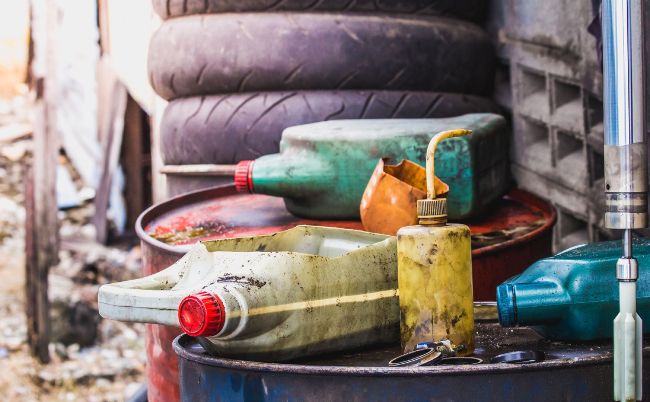
SOURCE | SHUTTERSTOCK/ BANGLENS
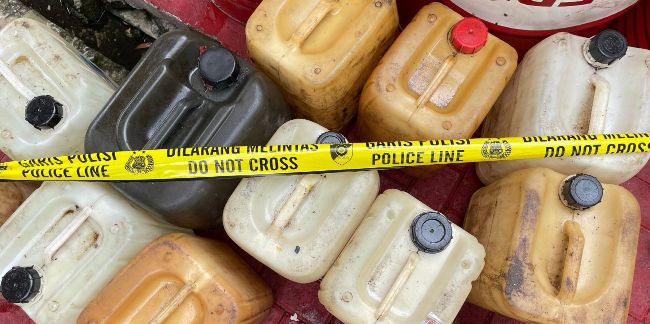
SOURCE | SHUTTERSTOCK/HANS KIMBERLAND HIU
Despite the government agencies’ efforts to combat this menace, it has continued to spread like a weed. Counterfeited lubricants have continued to compete for the market share with quality brands, which is eroding profit realization, while portraying the genuine lubricant brands in a bad light. Even imported low quality lubricants have continued to find their ways into the markets.
As the lubricant industry, it will take the major players who are lubricant manufacturers and the governments to take the leading position in the fight against counterfeits. Some of the mitigations that can be employed include:
• Engaging relevant government agencies or authorities to help in fighting the menace, including bringing perpetrators to face the law. To make this water-tight, the government can further strengthen the law on punishments for counterfeiters or offenders, since it is presently loose and without serious consequences.
• Lubricant brand owners or marketers can adopt very tight control measures to protect their brands and make counterfeiting difficult. These could involve doing the following:
• Introduction of Seals e.g. specially branded multi-colored paper seals and wire seals that when broken before the use of a product will raise suspicion about the quality of the product inside the gallon, pail or drum.
• Introduction of pilfer rings on the cap of lubricant gallons, etc.
• Introduction of special labels, which users could peel to reveal codes associated with the genuine products.
• Increased public awareness through radio and television adverts, billboards, and newspapers advertorial, tailored training for major users of lubricant, e.g., the auto-mechanics.
• Funding law enforcement agencies to trace and track locations where substandard products are being produced and prosecute such offenders or counterfeiters.
• Developing strategies and the capacity to prevent running out of quality products in the marketplace. This is to avoid creating scarcity that could lead to the adulteration of products to fill up the gaps created by the scarcity of such quality products in a given market or region.
• Fishing out bad eggs within the marketers’ sales value chain who may be collaborating in this menace and dealing squarely with such persons.
• Discouraging resales of used drums, including encouraging auto mechanics to puncture holes in lubricant drums, gallons, or cans after use to discourage re-use.
• Instituting a quality-check Surveillance Committee in conjunction with the government regulatory bodies to fight the menace.
The governments can play a significant role in helping deal with this problem in the following ways:
• Set a minimum quality standard for lubricants to be sold in the market, especially in the Passenger Vehicle Lubricants (PVL) and Commercial Vehicle Lubricants (CVL) segments, and sanction defaulters.
• Increase duties on imported finished lubricants to discourage or prevent importation of low-grade products in the market.
• Encourage local production of raw materials required in quality lubricant blending through tax incentives to help reduce high prices of manufacturing and discourage counterfeiting.
• Encourage inter-laboratories lubricant testing within the industry to reinforce confidence in the quality of lubricants being sold.
It cannot be stressed enough the danger of using counterfeit products. Using these lubricants is a ticking time bomb in relation to the equipment or vehicle in use. When not sure of the source of the product and its qualities, it is important to keep in mind that the following are the effects of using counterfeit lubricants:
• Increased friction when used by an engine, which causes excessive overheating, leading to energy losses, oxidation, nitration, and premature wear of metal components, leading to engine failure.
• Promoting corrosion and rust, hence allowing moisture and contaminants to damage equipment and infrastructure.
• Presence of contaminants or impurities that can compromise equipment performance and service life.
• Increased unscheduled downtime resulting in costly maintenance, loss of production, and a dip in profits.
• Increased deposits and darkening of internal components of the machine due to issues of poor cleanliness and sludge formation.
• Increased emissions from poor-quality lubricants can contribute to poor air quality and environmental pollution.
Conclusion
In the lubrication field, oil is not just oil. Depending on how well you presently handle your machinery asset lubrication services, be it your car or power generating set, etc. It is worth noting that you can actually extend the service life of any of these machines by using only high-quality lubricants. Lubricant quality is a key determinant of higher levels of equipment performance and reliability. Therefore, embracing quality in lubrication will surely save you from the high cost of asset maintenance.