COPIED
2 mins

LUBRICATION

Lubricants: Consumables or Repairable Spare Parts?

In most maintenance organizations, lubricants are classified as consumables: purchased, stored, issued, used, and periodically replaced. It can, however, understate the lubricant’s role in equipment reliability. A more useful maintenance perspective treats lubricant as having a dual identity: a consumable whose quantity is depleted and a maintainable, functionally repairable machine component.

Lubricant consumption is unavoidable. Oil is progressively lost through leakage, evaporation, combustion, and other operating conditions, requiring replenishment. Consumption can therefore be forecast from operating conditions and managed alongside maintenance spares[1] .

However, like a repairable component, lubricant condition deteriorates during service. Oxidation, contamination, additive depletion, viscosity changes, and wear-particle accumulation gradually reduce its ability to perform its intended function. Unlike a conventional consumable that is simply discarded, lubricant condition can be monitored and interventions selected according to its actual state.

These interventions include full-volume or partial oil changes, filtration, centrifuging, accessory changes, and system purging [1]. A full-volume change drains and replaces the entire lubricant charge, when significant oxidation, viscosity change, additive depletion, or contamination has occurred. It restores the lubricant to a baseline but costs more and generates more waste.

A partial oil change replaces only part of the charge, leaving the remainder in service. Where contamination is moderate, this can dilute contaminants and replenish additives without the cost and waste associated with a complete change. It can be useful in large-volume systems such as turbines and hydraulic reservoirs, sometimes between scheduled full changes.

Filtration and centrifuging provide another form of lubricant “repair” by removing contaminants, water, and wear debris while retaining usable oil. Where appropriate, filtered used oil with low metal and water content may also be reused for less-sensitive applications. Reuse decisions must consider the application and oil condition rather than assuming that filtered used oil remains suitable.

Re-refining extends the concept further by treating used oil as a valuable core for recovery. Used oil is collected, dehydrated and separated through processes such as vacuum distillation, then further purified through hydrotreatment. The recovered base oil can subsequently be blended with additives to produce lubricants. In this sense, re-refining resembles liquid remanufacturing, extending the useful life and value of the lubricant’s hydrocarbon base.

The maintenance implication is significant: lubricant should not automatically be replaced simply because it has reached a predetermined interval. Condition monitoring can establish whether oil remains serviceable, requires filtration or partial replenishment, or has reached a condition requiring complete replacement.

The question, therefore, is not whether lubricant is a spare or consumable, but how it should be managed as a machine component whose quantity is consumed, condition deteriorates, and function can sometimes be restored. This approach can reduce unnecessary oil changes, support equipment reliability, control waste, and integrate lubrication effectively into asset-management strategy. .

Reference

[1] J. Wakiru, L. Pintelon, P. N. Muchiri, P. K. Chemweno, and S. Mburu, “Towards an innovative lubricant condition monitoring strategy for maintenance of ageing multi-unit systems,” Reliability Engineering & System Safety, vol. 204, p. 107200, 2020, doi: 10.1016/j.ress.2020.107200.
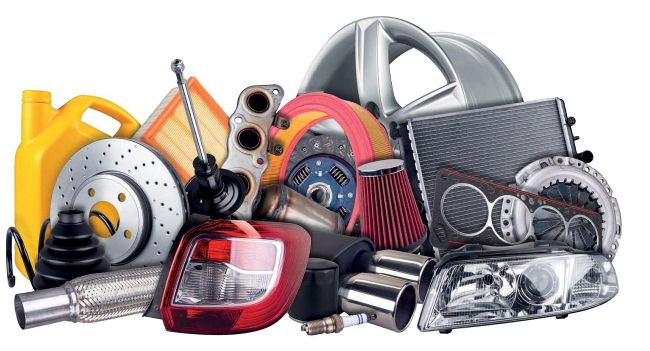
Motor vehicle spart parts.
SOURCE | SHUTTERSTOCK
This article appears in Issue 58

Go to Page View
This article appears in...
Issue 58
Go to Page View
The Litre is Only the Beginning
W elcome to the 58th edition of Lubezine
ADNOC Distribution enters into Definitive Agreement to Acquire Shell Downstream South Africa
PAN-AFRICAN BRIEFING
BRANDS IN BRIEF
OLA Energy Expands Ethiopia Presence Through Acquisition of
Engen DRC: Launch of Shell Lubricants in the DRC
PAN-AFRICAN BRIEFING E ngen DRC, a subsidiary of
Lubrizol Expands Fluid Engineering Distribution Network Across Africa
L ubrizol is expanding its Fluid Engineering (LFE)
Nasan Energies Acquires 52 Fuel Stations in US$50 Million Deal
N amibian-owned Nasan Energies has completed the acquisition
Vivo Energy Tunisia Expands Shell Lubricants Distribution Through Equip Auto Partnership
V ivo Energy Tunisia has announced the signing
TotalEnergies Tunisie Partners with AD Tunisie and Ulysse Spare Parts
PAN-AFRICAN BRIEFING T otalEnergies Marketing Tunisie and AD
Kemipex Commences Lubimax® Additive Sales in Nigeria
K emipex Limited has commenced sales operations in
OLA Energy Acquires TotalEnergies’ Ethiopia Network, Ending 76-Year Presence
O LA Energy has signed an agreement to
Vivo Energy Extends Beyond Africa, Buys out Total Energies in Jordan
V ivo Energy has expanded beyond Africa for
It’s More Than Just Oil
A CONVERSATION WITH STEVEN LUMLEY
Re-Refined Base Oils: Understanding RRBO Quality, Performance and Value
This edition’s FAQ section examines re-refined base oils (RRBO), from how used lubricants are transformed into base oils to quality, performance, feedstock suitability, and cost. It provides practical insights into RRBO production, application, and its growing role in circularity and sustainable lubricant manufacturing.
THE LUBES DIARY
EVENTS FROM ACROSS THE GLOBE
Lubricants: Consumables or Repairable Spare Parts?
I n most maintenance organizations, lubricants are classified
Launches PC-12 Additive
PRODUCTS & INNOVATIONS
FUCHS UK Announces Investment in New Quality Control Laboratory
F UCHS Lubricants (UK) plc has announced an
Introduces Restore & Protect Lubricant in Europe
V alvoline Global Operations, a manufacturer of automotive
A landmark MoU signed between OilOnWheelz and Hindustan Petroleum Corporation Limited
E very meaningful change begins with one simple
Aramco and FUCHS Sign Global Base Oils Agreement to Strengthen Long-Term Collaboration
A ramco and FUCHS have signed a Global
BP Sells Majority Stake in Castrol in US$10.1 Billion Deal
B P has sold majority control of Castrol
The Evolution of Circularity: Pioneering Re-Refining in Egypt’s Lubricant Sector
N early a decade ago, in 2017, we
Motul Develops Bespoke Gearbox Lubricant for McLaren F1
M cLaren Racing and Motul have expanded their
PETRONAS Lubricants India Partners with Maruti Suzuki India
P ETRONAS Lubricants India is the appointed supplier
Shell and Hyundai Motor Renew Their Partnership
S hell Lubricants and Hyundai Motor Company have
PSP Energy secures Sinopec lubricants distribution rights
P ETALING JAYA: PSP Energy Bhd , via
Tata Motors and Castrol India Collaborate to Advance Used Oil Circularity
Castrol and Tata Motors executives proudly display signed
SK Enmove, HF Sinclair Announce Group III Agreements
S K Enmove has entered into strategic agreements
Vitol Sells Its VTX Energy Company To Verde Operating Company
V itol has agreed to sell its US
Valvoline Launches Valco Company in Saudi Arabia
V alvoline Global Operations, an automotive and industrial
A Hidden Sustainability Challenge
From Waste to Worth Sustainability Used Oil and
Building Competitive Lubricant Businesses in Africa
In this edition, Lubezine features Irfan Khan, Founder and Director of Business Development at GAUGE ENERGY, whose experience in finance, lubricants, blending, and market development offers practical perspectives on Africa’s evolving lubricants industry and future.
The Global Group III Base Oil Shortage: Strategic Implications for African Lubricant Buyers
G roup III base oils have become a
From Maintenance Task to Reliability Driver in Modern Asset-Intensive Industries
I n asset-intensive industries, lubrication is often treated
Looking for back issues?
Browse the Archive >

Previous Article Next Article
Issue 58
CONTENTS
Page 14
PAGE VIEW