As Africa’s industrial landscape expands, advanced lubrication solutions are becoming central to operational reliability, equipment longevity, and cost efficiency. From mining and cement to sugar processing and manufacturing, industries across the continent operate in demanding environments that require high-performance lubrication strategies. During a recent Lubezine Magazine webinar, Richard Mugambi, Technical and Commercial Lead for Africa at LAAPSA, shared insights into how lubrication technology is evolving to support Africa’s fast-growing industrial sectors.
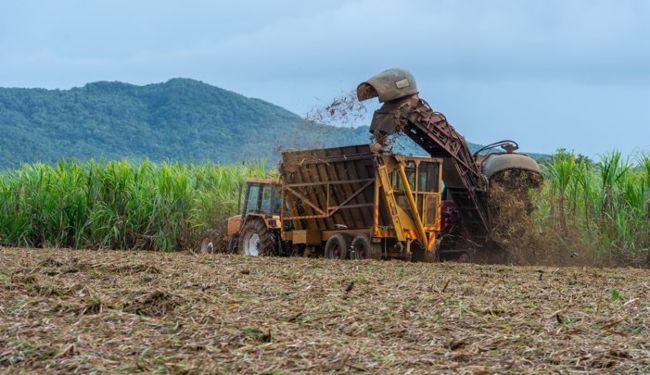
Harvesting Sugarcane on Mauritus Island.
SOURCE | SHUTTERSTOCK
Industrial growth and rising demand
Africa’s industrial growth - driven by mining, manufacturing, and infrastructure - is accelerating alongside population and economic expansion. This growth is directly increasing demand for specialized lubricants.
“Africa remains one of the fastest-growing region driven largely by mining and manufacturing,” Mugambi said, noting that as these sectors expand, “the need for reliable lubrication solutions grows.”
Across the continent, heavy industries operate under extreme conditions, including high temperatures, heavy loads, dust contamination, and moisture exposure. These factors make high-performance lubricants essential for protecting machinery, maintaining uptime, and reducing costly failures.
Sector challenges and solutions
The sugar industry presents unique lubrication challenges, particularly due to high moisture levels, shock loads, and seasonal operations. Equipment such as mill bearings and pinions operates under intense stress, often using loss lubrication systems.
“Sugar factories rely on specialized lubrication systems with the right viscosity and load-bearing capacity,” Mugambi explained, emphasizing that proper lubricant selection is key to ensuring plant availability.
Cement plants operate under similarly harsh conditions, with high heat and dust affecting kilns, ball mills, and large gear systems. In these environments, selecting the correct lubricant is critical to performance and longevity.
“You need specialized open gear lubricants and high-viscosity oils,” Mugambi noted, adding that synthetic lubricants are increasingly preferred for critical components.
“In high-value assets synthetics provide extra protection and help avoid costly downtime,” he added.
Mining operations push equipment even further, with continuous loads and harsh terrain placing extreme stress on machinery. As a result, predictive maintenance is becoming essential.
“Condition monitoring and oil analysis help detect problems early,” Mugambi said, highlighting their role in reducing unplanned downtime and extending equipment life.
Improving practices and embracing innovation
Despite advances in lubrication technology, many plants still struggle with basic practices. Common issues include cross-contamination, mixing incompatible greases, and failure to conduct root-cause analysis.
“These mistakes may seem small, but their consequences can be severe,” Mugambi warned, stressing the importance of training and proper lubrication discipline.
In parallel, digitalization is transforming lubrication management. Technologies such as IoT sensors, oil analysis tools, and predictive maintenance systems are enabling companies to optimize lubricant usage, extend drain intervals, and improve overall efficiency.
Sustainability is also shaping the future of lubrication, with increased focus on biodegradable lubricants, longer service intervals, and improved energy efficiency.
The road ahead
Looking ahead, LAAPSA aims to expand access to advanced lubrication technologies across Africa by strengthening partnerships and improving local availability.
“Our vision is to make high-performance lubrication solutions accessible across Africa,” Mugambi said, emphasizing the importance of combining products, technical support, and training.
He concluded by reinforcing lubrication’s strategic role: “It should not be a passive function, but an active partnership” focused on reliability, efficiency, and long-term industrial growth. .