ENDURANCE
The WRC Safari Rally Kenya is famous for pushing cars - and crews - to their limits. With dust-filled air, rough terrain, deep mud, water crossings, and high temperatures, it remains one of the toughest events on the rally calendar. But beyond the excitement, it also serves as a real-world test of how well automotive fluids perform under pressure.
This year, the spotlight extended beyond the stages. Rubis Energy Kenya, working alongside Castrol, sponsored the Chana brothers, showcasing both local talent and the confidence of global lubricant technology in extreme African conditions. Their participation reflected how motorsport continues to connect performance, innovation, and real-world application.
Every stage of the Safari Rally places intense stress on a vehicle. Engines run hot for long periods, transmissions absorb constant shock, and dust or water can easily find its way into critical systems.
High-quality engine oils play a key role in keeping vehicles running smoothly. They provide thermal stability, resist oxidation, and protect engine components from wear - even when conditions are far from ideal. However, alongside lubrication, brake fluid plays an equally important role.
In rally driving, braking systems are used heavily and repeatedly, often under high speeds and on unpredictable surfaces. This generates significant heat. Brake fluid must maintain a high boiling point to ensure consistent performance. If it overheats and forms vapor, braking efficiency drops, affecting control and safety. In a rally like Safari, where precision matters on every corner, reliable brake fluid is essential.
What makes the Safari Rally particularly relevant is how closely it reflects everyday conditions across Africa. Dusty environments, muddy terrain, and high temperatures are common in sectors such as transport, construction, and agriculture.
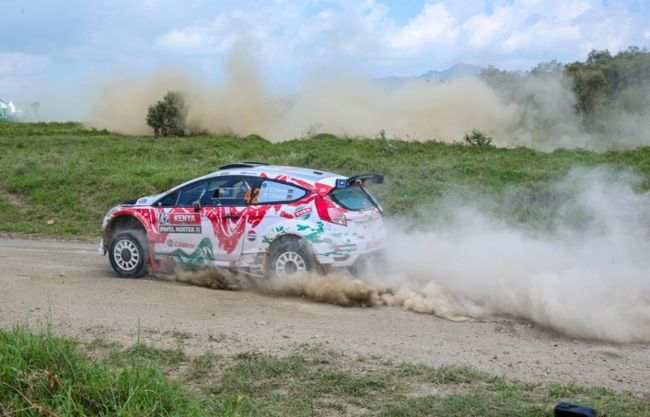
Chana brothers in action during WRC Safari Rally Kenya, 2026.
SOURCE | RUBIS
»What makes the Safari Rally particularly relevant is how closely it reflects everyday conditions across Africa. Dusty environments, muddy terrain, and high temperatures are common in sectors such as transport, construction, and agriculture.
For vehicles operating across East Africa - from heavy-duty trucks to motorcycles - these are not occasional challenges but daily realities. Both lubricants and brake fluids must perform consistently, even with exposure to contaminants and varying maintenance practices.
Performance that goes beyond the race
The rally reinforces an important message: reliability is just as important as performance. The Chana brothers’ participation, supported by Rubis Energy Kenya and Castrol, highlighted how the right fluid technologies can make a difference in demanding conditions.
Lubricants help reduce friction, protect engine components, and extend equipment life. Brake fluids ensure consistent stopping power and control. Together, they contribute to safer, more efficient operation - whether on rally stages or public roads.
Driving innovation forward
Technologies tested in motorsport often find their way into everyday applications. From advanced synthetic lubricants to improved brake fluid formulations, innovation continues to shape Africa’s automotive and industrial sectors.
Just as racing excellence pushes engineering limits, Jasmeet Chana and Ravi Chana with car No. 42 triumph at the Kenya National Rally Championship powerfully showcases how peak performance drives innovation and progress far beyond the track. .